LUMÉCEL
璐美赛
Treatments
璐美赛细胞治疗
被时间磨钝的自我修复能力,由璐美赛重新唤醒。

What is Lumécel
什么是璐美赛细胞治疗?
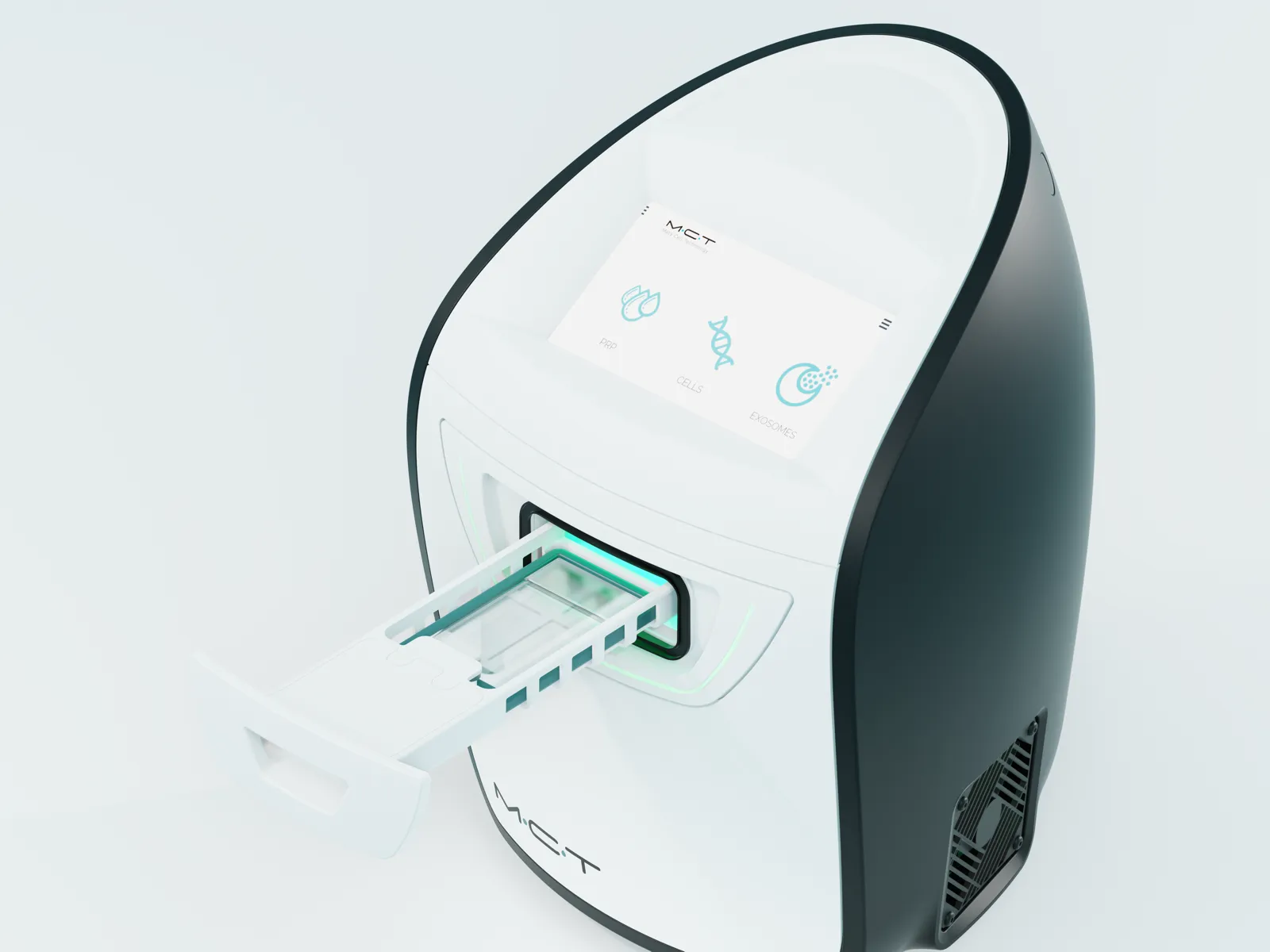
璐美赛(Lumécel)是爱动整形外科医院(Etonne)的再生医学细胞治疗项目。我们在自体血液来源细胞治疗成分与脂肪来源再生成分的基础上,加入以光与温度进行的 MCT 预处理,帮助皮肤与组织营造修复所需的环境。
Who & Where
适合哪些人?
当您为皮肤老化、炎症性或特应性皮肤问题、脱发与头皮状态而困扰,或希望同时管理全身恢复能力时,可以考虑这项治疗。
基本方式是直接送达面部、颈部、手部、头皮等需要的部位。如果比起某个特定部位,您更在意整体状态,则可以考虑目的不同的静脉注射,同时兼顾全身。
我们优先考虑自体脂肪治疗;如果您体型偏瘦,或因多次治疗而难以获取脂肪,则选择自体血液治疗。
| 适用对象与困扰 | 预期变化 | |
|---|---|---|
| Facial | 整体性皮肤老化 | 改善皮肤状态与肤质 |
| Skin | 特应性皮肤、炎症性皮肤问题、免疫性皮肤问题等 | 改善皮肤状态与肤质 |
| Hair | 脱发、头皮状态 | 改善毛发密度与头皮状态 |
| IV injection | 管理全身状态与恢复能力 | 以管理全身状态为目的的使用 |
* 关于炎症性痤疮与特应性皮肤的临床依据,来自以自体血液来源细胞治疗成分为对象的研究;关于毛发密度,自体血液成分与脂肪来源再生成分两方面均有研究。24, 25, 26, 27, 28, 31, 32 反应与改善程度因人而异,因此我们会在咨询时先与您一起判断这项治疗现在是否适合您。静脉注射是否适用,需根据检查结果决定;所需的治疗次数也因人而异。免疫相关的皮肤状态,同样在咨询时先判断是否可以适用。
Why Lumécel
重要的不是用什么,而是怎么用
同样的自体血液来源细胞治疗成分与脂肪来源再生成分,处理方式不同,潜力也随之不同。
璐美赛细胞治疗所用再生成分的品质,会因分离、浓缩与处理的方式而有很大差异。这正是爱动在细胞处理系统上投入心力的原因。我们不只是把成分提取出来,而是通过精细的分离与浓缩,以及稳定的温度管理,营造尽量减少细胞负担的条件。正如璐美赛这个名字所表达的:以光与温度唤醒细胞。
展开阅读收起
What We Use
再生医学使用的是什么?
我们使用的不是外来物质,而是来自您自身的自体成分。
COMPARISON
| 项目 | 脂肪来源干细胞 | 自体血液成分 |
|---|---|---|
| 来源 | 脂肪组织 | 血液 |
| 主要成分 | 多种再生细胞 | 血小板来源生长因子与自体外泌体 |
| 运送的是什么 | 细胞 | 信号 |
| 核心作用 | 细胞定植并释放信号,营造修复环境 | 向您的细胞传递修复信号 |
| 外泌体 | 由注入的细胞在体内分泌 | 从血小板中获取并一同送达 |
| 采集方法 | 微创方式采集自体脂肪 | 自体采血 |
展开阅读收起
差别在于“运送的是什么”。自体血液来源细胞治疗成分运送的是信号:血小板释放的生长因子与自体外泌体,向您的细胞发出修复指令。3, 4, 9 脂肪来源再生成分运送的是细胞:不只是干细胞,还包括血管内皮细胞、血管周细胞、巨噬细胞在内的混合细胞群。这些细胞定植之后相互传递信号,并释放生长因子与外泌体。11, 21, 22, 23 外泌体与其说是“含有”的,不如说是细胞在体内“制造”出来的。1, 3
在难以使用脂肪的情况下,血液是一个有吸引力的替代选择,但过去一直难以获得预期的效果。不过,随着相关技术在过去二十年间不断发展、依据不断积累,如今血液也已成为值得充分考虑的选项。18, 19 我们对血浆纯化环节进行精细设计,并同时应用经过精确波长调控的光与温度预处理。
* 脂肪来源再生成分是无需培养扩增、分离后直接使用的细胞混合物。细胞组成比例因人和分离方式而异;动物与体外研究报告显示,与单独使用干细胞相比,共存细胞之间的协同对作用有所贡献。21, 22, 29, 30
How Does It Work
细胞治疗是如何起作用的?
再生细胞不是“砖块”,而是“工地负责人”。
效果从什么时候开始显现?
细胞治疗不像填充剂那样带来即时变化。变化通常从大约1周起,在3~6个月内逐渐显现。
-
约1周
炎症逐渐平息
最初进行的是“整理场地”。治疗引起的反应逐渐平息,修复开始的条件随之形成。炎症期会持续到这一阶段前后,此时聚集的免疫细胞清理损伤部位,并发出为下一阶段做准备的信号。注入的再生成分在这一时期也朝着传递修复信号的方向发挥作用。
-
2~4周
新血管增多
这是增殖期变化持续的区间。损伤部位周围长入新生毛细血管,氧气与营养供应增加;成纤维细胞聚集,开始构建新组织的基础。这一时期,内部的准备比外在可见的变化更为主要。
-
1~3个月
胶原蛋白增加
被激活的成纤维细胞会生成胶原蛋白和细胞外基质,使真皮层逐渐充盈饱满。开始感受到肤质与弹性变化的时间大多在这一阶段前后,反应速度因人而异。
-
3~6个月
组织重新稳定
这是重塑期。快速生成的胶原蛋白转变为更有序的结构,暂时增多的血管只保留必要的部分,组织趋于稳定。由于这是变化稳定下来的时期,是否需要追加治疗,会根据这一阶段的状态来判断。
从诊断到治疗,One-Stop
从诊断到治疗是如何进行的?
从诊断、血液与脂肪采集、细胞分离、预处理到治疗,全部在爱动内部一气呵成。
由整形外科专科医师负责诊断与治疗,并掌握减少组织损伤的脂肪获取技术。爱动同时处理自体血液来源细胞治疗成分与脂肪来源再生成分,并运行将精密细胞分离与 MCT 预处理相结合的处理系统。从血液与脂肪采集到再生治疗一站式衔接,方案按个人情况制定。
-
01
诊断
整形外科专科医师确认皮肤状态、病史与正在服用的药物,确定治疗方法。在明确需要改善的部位之后,决定以自体血液还是脂肪成分进行细胞治疗。
-
02
血液与脂肪采集
血液与脂肪采集在一个始终保持可进行手术状态的空间内进行。空间的防疫与消毒、所用器械均始终按该标准管理,并在这一状态下获取血液与脂肪。
-
03
细胞分离与预处理
用于细胞分离与纯化的设备,是参考比较回收细胞数量的资料后选定的。以该设备完成分离与纯化后,再经过精确调控的 MCT 预处理,让细胞处于能够发挥作用的状态。
-
04
治疗
治疗分为直接送达治疗部位的方式,以及通过静脉注射送达全身的方式。根据目的确定采用哪一种之后,由专科医师按所需的层次直接送达。
* 有报告显示,用于脂肪来源成分细胞分离的一次性套件方式,与人工操作方式相比工艺偏差更小、回收量更稳定;我们团队的内部测试也确认了同样的趋势。
不是单一的治疗,而是设计修复的过程
在再生医学中真正重要的,不是“哪种治疗更好”,而是“什么治疗最适合我现在的状态”。
爱动的璐美赛细胞治疗,从准确诊断个人状态开始,将合适再生成分的选择、细胞分离与 MCT 预处理,以及符合目的的送达方式,设计为一个完整的流程。
共同拓展修复的范围
- 帮助术后快速恢复的解决方案
- 联合皮肤增效针(Skin Booster),提升皮肤状态
- 为取得更好的改善,联合应用多种治疗
展开阅读收起
根据需要单独应用,或与其他治疗联合进行,营造更有效的修复环境。
治疗后如何护理?
治疗次日到医院接受术后恢复护理;如果您接受的是自体脂肪治疗,一周后还需再来一次。
次日
治疗次日请到医院接受术后恢复护理。两种治疗都会同时进行高压氧治疗。
展开阅读收起
自体血液治疗:通过冷敷与舒缓护理,让面部治疗部位平复下来。护理将在当天完成。
自体脂肪治疗:除面部舒缓护理外,同时护理采集脂肪的腹部。
一周后
如果您接受的是自体脂肪治疗,一周后请再来一次拆线,并同时查看面部与腹部。自体血液治疗则无需这次复诊。原因是自体脂肪治疗需要护理的部位有两处(治疗部位与采集部位),而自体血液治疗只有一处。
洁面、化妆、饮酒、运动等日常注意事项,整理在下方的常见问题中。
FAQ
我们汇总了在璐美赛细胞治疗咨询中经常被问到的问题。
璐美赛细胞治疗对每个人的效果都一样吗?
细胞治疗不是能解决一切的万能疗法。反应与改善的程度存在明显的个体差异。不过,综合迄今为止的依据,爱动认为,在合适的对象身上以正确的方法实施时,这是一项可以期待有意义改善的治疗。
璐美赛细胞治疗安全吗?
由于以自体血液与自体组织为基础,只要遵守无菌原则进行治疗,发生异物反应、过敏、感染的顾虑较小。不过,顾虑较小并不等于没有任何反应。治疗部位可能出现轻微肿胀或不适感,程度与持续时间因人而异。
璐美赛细胞治疗的疼痛程度如何?
大多数人都能够承受,不会太勉强。成分密度较高时可能会有些酸胀感,但不会持续太久。获取脂肪时也只处理必要的范围,因此治疗后的轻微肿胀或不适感大约持续一两天。自体脂肪治疗因采集部位需要同时恢复,所需时间会更长一些。
璐美赛细胞治疗如何麻醉?
自体脂肪治疗在镇静麻醉(睡眠麻醉)下进行。自体血液治疗我们建议采用镇静麻醉,但根据个人状态与治疗范围,也可以考虑局部麻醉。
璐美赛细胞治疗后会出现淤青或肿胀吗?
可能出现轻微淤青或肿胀,但通常一两天即可消退。自体脂肪治疗的采集部位也可能出现淤青或不适感,消退所需的时间会更长一些。
璐美赛细胞治疗后何时可以恢复日常生活?
洁面、化妆与运动从次日起即可进行。不过,如果您接受的是自体脂肪治疗,在脂肪采集部位恢复之前的一周内,需要暂缓运动。饮酒建议在一周后,桑拿建议在一个月后。紫外线建议在大约三个月内尽量避免。具体指导可能因治疗范围与个人状态而有所不同,我们会在治疗当天再次向您确认。
璐美赛细胞治疗除了面部,其他部位也可以吗?
可以应用于颈部、手部、头皮等各类需要再生的部位。
璐美赛细胞治疗可以与其他治疗联合进行吗?
可以。可与多种治疗联合进行,具体组合根据目的与个人状态确定。
参考文献
本页的说明分别依据哪些文献,在此一并列出。
展开参考文献列表收起参考文献列表
以下文献涉及一般性作用机制,并不保证治疗效果。
- . Paracrine Mechanisms in Adult Stem Cell Signaling and Therapy. Circ Res. 2008. DOI 10.1161/CIRCRESAHA.108.176826 · PMID 19028920
- . Mesenchymal Stem Cells: Time to Change the Name! Stem Cells Transl Med. 2017. DOI 10.1002/sctm.17-0051 · PMID 28452204
- . Concise Review: MSC-Derived Exosomes for Cell-Free Therapy. Stem Cells. 2017. DOI 10.1002/stem.2575 · PMID 28294454
- . The biology, function, and biomedical applications of exosomes. Science. 2020. DOI 10.1126/science.aau6977 · PMID 32029601
- Growth factors and cytokines in wound healing. Wound Repair Regen. 2008. DOI 10.1111/j.1524-475X.2008.00410.x · PMID 19128254
- Exosomes released from human induced pluripotent stem cells-derived MSCs facilitate cutaneous wound healing by promoting collagen synthesis and angiogenesis. J Transl Med. 2015. DOI 10.1186/s12967-015-0417-0 · PMID 25638205
- Exosomes derived from human adipose mensenchymal stem cells accelerates cutaneous wound healing via optimizing the characteristics of fibroblasts. Sci Rep. 2016. DOI 10.1038/srep32993 · PMID 27615560
- Wound healing effect of adipose-derived stem cells: a critical role of secretory factors on human dermal fibroblasts. J Dermatol Sci. 2007. DOI 10.1016/j.jdermsci.2007.05.018 · PMID 17643966
- . A Review of Platelet-Rich Plasma: History, Biology, Mechanism of Action, and Classification. Skin Appendage Disord. 2018. DOI 10.1159/000477353 · PMID 29457008
- . From platelets to paracrine signals: A review of PRP, exosomes, and cell-based interventions for skin repair and rejuvenation. Nanomedicine. 2026. DOI 10.1016/j.nano.2026.102905 · PMID 41580060
- Stromal cells from the adipose tissue-derived stromal vascular fraction and culture expanded adipose tissue-derived stromal/stem cells: a joint statement of the International Federation for Adipose Therapeutics and Science (IFATS) and the International Society for Cellular Therapy (ISCT). Cytotherapy. 2013. DOI 10.1016/j.jcyt.2013.02.006 · PMID 23570660
- . Adipose tissue-derived stromal vascular fraction in regenerative medicine: a brief review on biology and translation. Stem Cell Res Ther. 2017. DOI 10.1186/s13287-017-0598-y · PMID 28619097
- . Photobiomodulation: A review of the molecular evidence for low level light therapy. J Plast Reconstr Aesthet Surg. 2021. DOI 10.1016/j.bjps.2020.12.059 · PMID 33436333
- . Proposed Mechanisms of Photobiomodulation or Low-Level Light Therapy. IEEE J Sel Top Quantum Electron. 2016. DOI 10.1109/JSTQE.2016.2561201 · PMID 28070154
- Low-level laser (light) therapy increases mitochondrial membrane potential and ATP synthesis in C2C12 myotubes with a peak response at 3-6 h. Photochem Photobiol. 2015. DOI 10.1111/php.12397 · PMID 25443662
- . Wound repair and regeneration: mechanisms, signaling, and translation. Sci Transl Med. 2014. DOI 10.1126/scitranslmed.3009337 · PMID 25473038
- . Angiogenesis in wound healing. J Investig Dermatol Symp Proc. 2000. DOI 10.1046/j.1087-0024.2000.00014.x · PMID 11147674
- Efficacy and safety of photothermal biomodulated platelet-rich plasma versus standard platelet-rich plasma for facial rejuvenation: a prospective split-face randomized study. Sci Rep. 2026. DOI 10.1038/s41598-026-54310-9 · PMID 42225690
- Photothermal Biostimulation of Platelet-Rich Plasma Improves Hand Rejuvenation Clinical Outcome: A Pilot Study. Photobiomodul Photomed Laser Surg. 2024. DOI 10.1089/pho.2023.0192 · PMID 38836757
- . The Effect of Photobiomodulation on Human Mesenchymal Cells: A Literature Review. Aesthetic Plast Surg. 2021. DOI 10.1007/s00266-021-02173-y · PMID 33616715
- Characterization of freshly isolated and cultured cells derived from the fatty and fluid portions of liposuction aspirates. J Cell Physiol. 2006. DOI 10.1002/jcp.20636 · PMID 16557516
- . The Adipose Stromal Vascular Fraction as a Complex Cellular Source for Tissue Engineering Applications. Tissue Eng Part B Rev. 2017. DOI 10.1089/ten.TEB.2017.0061 · PMID 28316259
- The ratio of ADSCs to HSC-progenitors in adipose tissue derived SVF may provide the key to predict the outcome of stem-cell therapy. Clin Transl Med. 2018. DOI 10.1186/s40169-018-0183-8 · PMID 29417261
- . Clinical evaluation of efficacy of intralesional platelet-rich plasma injection versus 1064 nm long-pulsed Neodymium:YAG laser in the treatment of inflammatory acne vulgaris in adolescent and post-adolescent patients: a prospective randomized split-face comparative study. Lasers Med Sci. 2022. DOI 10.1007/s10103-022-03510-6 · PMID 35084634
- Platelet rich plasma injection versus topical erythromycin 2% in treatment of acne vulgaris. J Dermatolog Treat. 2020. DOI 10.1080/09546634.2020.1793884 · PMID 32643473
- . Possible clinical efficacy and tolerability of platelet-rich plasma with atopic dermatitis. J Cosmet Dermatol. 2021. DOI 10.1111/jocd.14170 · PMID 34114728
- Platelet-Rich Plasma for Androgenetic Alopecia: A Systematic Review and Meta-Analysis of Randomized Controlled Trials. J Cutan Med Surg. 2023. DOI 10.1177/12034754231191461 · PMID 37533146
- Platelet-rich plasma for the treatment of alopecia: a systematic review and meta-analysis. Blood Transfus. 2021. DOI 10.2450/2021.0216-21 · PMID 34967722
- Human uncultured adipose-derived stromal vascular fraction shows therapeutic potential against osteoarthritis in immunodeficient rats via direct effects of transplanted M2 macrophages. Stem Cell Res Ther. 2024. DOI 10.1186/s13287-024-03946-3 · PMID 39334434
- Paracrine effect of the stromal vascular fraction containing M2 macrophages on human chondrocytes through the Smad2/3 signaling pathway. J Cell Physiol. 2022. DOI 10.1002/jcp.30823 · PMID 35766589
- The safety and efficacy of autologous adipose-derived stromal vascular fraction for nonscarring alopecia: A systematic review. Arch Dermatol Res. 2021. DOI 10.1007/s00403-021-02238-7 · PMID 34014340
- . Efficacy of autologous stromal vascular fraction injection in the treatment of androgenic alopecia. Arch Dermatol Res. 2022. DOI 10.1007/s00403-022-02501-5 · PMID 36525057
- . Wound repair and regeneration. Eur Surg Res. 2012. DOI 10.1159/000339613 · PMID 22797712
- . Cellular and molecular mechanisms of skin wound healing. Nat Rev Mol Cell Biol. 2024. DOI 10.1038/s41580-024-00715-1 · PMID 38528155
Gnecchi M, Zhang Z, Ni A, Dzau VJ. Paracrine Mechanisms in Adult Stem Cell Signaling and Therapy. Circ Res. 2008.
Caplan AI. Mesenchymal Stem Cells: Time to Change the Name! Stem Cells Transl Med. 2017.
Phinney DG, Pittenger MF. Concise Review: MSC-Derived Exosomes for Cell-Free Therapy. Stem Cells. 2017.
Kalluri R, LeBleu VS. The biology, function, and biomedical applications of exosomes. Science. 2020.
Barrientos S, Stojadinovic O, Golinko MS, et al. Growth factors and cytokines in wound healing. Wound Repair Regen. 2008.
Zhang J, Guan J, Niu X, et al. Exosomes released from human induced pluripotent stem cells-derived MSCs facilitate cutaneous wound healing by promoting collagen synthesis and angiogenesis. J Transl Med. 2015.
Hu L, Wang J, Zhou X, et al. Exosomes derived from human adipose mensenchymal stem cells accelerates cutaneous wound healing via optimizing the characteristics of fibroblasts. Sci Rep. 2016.
Kim WS, Park BS, Sung JH, et al. Wound healing effect of adipose-derived stem cells: a critical role of secretory factors on human dermal fibroblasts. J Dermatol Sci. 2007.
Alves R, Grimalt R. A Review of Platelet-Rich Plasma: History, Biology, Mechanism of Action, and Classification. Skin Appendage Disord. 2018.
Esmaeili E, Rad I. From platelets to paracrine signals: A review of PRP, exosomes, and cell-based interventions for skin repair and rejuvenation. Nanomedicine. 2026.
Bourin P, Bunnell BA, Casteilla L, et al. Stromal cells from the adipose tissue-derived stromal vascular fraction and culture expanded adipose tissue-derived stromal/stem cells: a joint statement of the International Federation for Adipose Therapeutics and Science (IFATS) and the International Society for Cellular Therapy (ISCT). Cytotherapy. 2013.
Bora P, Majumdar AS. Adipose tissue-derived stromal vascular fraction in regenerative medicine: a brief review on biology and translation. Stem Cell Res Ther. 2017.
Glass GE. Photobiomodulation: A review of the molecular evidence for low level light therapy. J Plast Reconstr Aesthet Surg. 2021.
de Freitas LF, Hamblin MR. Proposed Mechanisms of Photobiomodulation or Low-Level Light Therapy. IEEE J Sel Top Quantum Electron. 2016.
Ferraresi C, Kaippert B, Avci P, et al. Low-level laser (light) therapy increases mitochondrial membrane potential and ATP synthesis in C2C12 myotubes with a peak response at 3-6 h. Photochem Photobiol. 2015.
Eming SA, Martin P, Tomic-Canic M. Wound repair and regeneration: mechanisms, signaling, and translation. Sci Transl Med. 2014.
Tonnesen MG, Feng X, Clark RA. Angiogenesis in wound healing. J Investig Dermatol Symp Proc. 2000.
Wanitphakdeedecha R, Ollero MPGCR, Bhorntarakcharoen W, et al. Efficacy and safety of photothermal biomodulated platelet-rich plasma versus standard platelet-rich plasma for facial rejuvenation: a prospective split-face randomized study. Sci Rep. 2026.
Tejero García P, Mota Antigua S, Ortega Zamorano M, et al. Photothermal Biostimulation of Platelet-Rich Plasma Improves Hand Rejuvenation Clinical Outcome: A Pilot Study. Photobiomodul Photomed Laser Surg. 2024.
Pinto H, Goñi Oliver P, Sánchez-Vizcaíno Mengual E. The Effect of Photobiomodulation on Human Mesenchymal Cells: A Literature Review. Aesthetic Plast Surg. 2021.
Yoshimura K, Shigeura T, Matsumoto D, et al. Characterization of freshly isolated and cultured cells derived from the fatty and fluid portions of liposuction aspirates. J Cell Physiol. 2006.
Ramakrishnan VM, Boyd NL. The Adipose Stromal Vascular Fraction as a Complex Cellular Source for Tissue Engineering Applications. Tissue Eng Part B Rev. 2017.
Kilinc MO, Santidrian A, Minev I, et al. The ratio of ADSCs to HSC-progenitors in adipose tissue derived SVF may provide the key to predict the outcome of stem-cell therapy. Clin Transl Med. 2018.
Moftah NH, Mansour AM, Ibrahim SMA. Clinical evaluation of efficacy of intralesional platelet-rich plasma injection versus 1064 nm long-pulsed Neodymium:YAG laser in the treatment of inflammatory acne vulgaris in adolescent and post-adolescent patients: a prospective randomized split-face comparative study. Lasers Med Sci. 2022.
Ibrahim ZA, Gheida SF, El-Halaby AR, et al. Platelet rich plasma injection versus topical erythromycin 2% in treatment of acne vulgaris. J Dermatolog Treat. 2020.
Yosef A, Elkady N, Khattab F. Possible clinical efficacy and tolerability of platelet-rich plasma with atopic dermatitis. J Cosmet Dermatol. 2021.
Zhang X, Ji Y, Zhou M, et al. Platelet-Rich Plasma for Androgenetic Alopecia: A Systematic Review and Meta-Analysis of Randomized Controlled Trials. J Cutan Med Surg. 2023.
Cruciani M, Masiello F, Pati I, et al. Platelet-rich plasma for the treatment of alopecia: a systematic review and meta-analysis. Blood Transfus. 2021.
Onoi Y, Matsumoto T, Anjiki K, et al. Human uncultured adipose-derived stromal vascular fraction shows therapeutic potential against osteoarthritis in immunodeficient rats via direct effects of transplanted M2 macrophages. Stem Cell Res Ther. 2024.
Fujita M, Matsumoto T, Hayashi S, et al. Paracrine effect of the stromal vascular fraction containing M2 macrophages on human chondrocytes through the Smad2/3 signaling pathway. J Cell Physiol. 2022.
Kang BY, Li AW, Lee MH, et al. The safety and efficacy of autologous adipose-derived stromal vascular fraction for nonscarring alopecia: A systematic review. Arch Dermatol Res. 2021.
El-Khalawany M, Rageh MA, Elnokrashy I, Ibrahim SMA. Efficacy of autologous stromal vascular fraction injection in the treatment of androgenic alopecia. Arch Dermatol Res. 2022.
Reinke JM, Sorg H. Wound repair and regeneration. Eur Surg Res. 2012.
Peña OA, Martin P. Cellular and molecular mechanisms of skin wound healing. Nat Rev Mol Cell Biol. 2024.

医学审核:金学永(Kim Harkyoung), 曺延穆(Cho Jeongmok) 代表院长 · 最近审核